


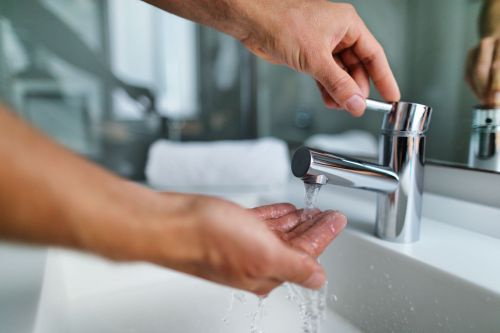
Very often, in our homes, we have to deal with low running water pressure, resulting in problems with daily use and the production of domestic hot water.
In fact, with low pressure, the boiler may have more difficulty heating the water, or may not be able to do so at all, as evidenced by the difference in hot and cold water flow.
In some cases, low pressure can be caused by simple limescale deposits, other times it is an upstream problem, such as a malfunctioning or even missing water pump.
Let's see together what the possible causes are and what to do to increase the water pressure in home.
Why is my water pressure low?
It's a very common question, one that almost everyone has asked at least once in their life, and the answers can be different.
The main causes of low water pressure are the following:
- limescale buildup in pipes, shower heads, and faucet filters;
- possible Blockages in the pipes, perhaps due to construction work in the building or home;
- Leaks along the plumbing system;
- Main valve not fully opened;
- Lack of a pressure pump;
- Electric pump malfunctioning, broken, or missing;
- Boiler malfunction;
- Very low temperatures, causing pipes to freeze.
Each cause has a possible solution, some simpler and more do-it-yourself-friendly, others decidedly more complex and requiring Specialized technical interventions.
Let's see how to proceed.
What to do when the water pressure is low?
The first thing to check when the water pressure in your home is low is to verify whether the problem is generalized or affects only one or more points.
For example, If the pressure is low only in one tap, it could be a buildup of limescale in the filters, so it will be sufficient to thoroughly clean or replace them.
In this regard, we recommend consulting our article “How to remove limescale from water”.
If it only occurs when turning on the water hot, then it is advisable to have the boiler checkedto identify the origin of the problem, probably the exchanger. In some cases, it may be sufficient to slightly increase the boiler pressure using the appropriate pressure gauge, but if the problem persists, then it is necessary to call a technician. If, however, the low water pressure affects the entire house, then it is advisable to focus on the connection point to the water mains, where it is usually located. There is a knobthat opens and closes the water and a pressure gauge, that indicates the pressure.
The latter must be between 1.5 and 3 bar, the optimal range to avoid any inconvenience in the home. If the pressure is less than 1.5 (but even 2, in some cases), then an electric pump is needed.
How to Increase Water Pressure with an Electric Pump
An electric pump is a device designed to increase water pressure in your home.
It is typically connected to the building's main water connection and allows you to take water from the mains and bring it into your home, increasing its pressure.
The models used today are powered by electricity, and can be submersible or surface-mounted, which are further divided into centrifuges and self-priming centrifuges.
We recommend that youtake a look at the models for sale in our online store by visiting the section data-mce-fragment="1"> Pumps and Electric Pumps.
In some cases it may be necessary to equip yourself with water tanks connected to an electric pump, commonly called autoclaves, which are filled with drinking water at atmospheric pressure to be drawn from for transport to homes. This solution is very useful in multi-story apartment buildings, to prevent those living on the upper floors from receiving low water pressure.
The specialized technician will identify the most effective solution to solve the problem and bring running water to house at the right pressure.